

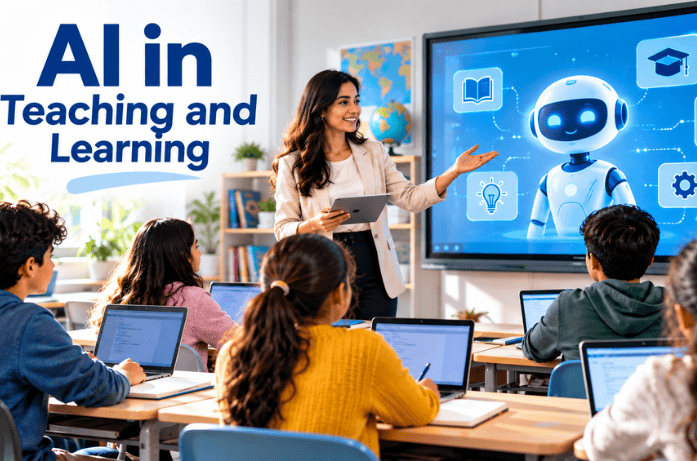
Education has always been about helping people learn, grow, and prepare for a better future. Today, however, both students and teachers face increasing academic pressure. This is where AI tools used in education are making a real impact by simplifying learning, saving time, and making education more engaging and personalized.
This is where AI tools used in education are making a real difference.
Artificial Intelligence isn’t replacing teachers or traditional learning. Instead, it is becoming a supportive partner that saves time, personalizes learning, and helps both students and educators focus on what truly matters, understanding concepts instead of simply completing tasks.
Whether you are a student looking to study smarter, a teacher trying to simplify classroom management, or a parent curious about modern learning methods, AI can offer practical solutions that improve the educational experience.
In this guide, we will explore the best AI tools used in education, their benefits, real-world applications, and how they are shaping the future of learning.
Key Takeaways
1. AI tools used in education make learning faster, smarter, and more personalized.
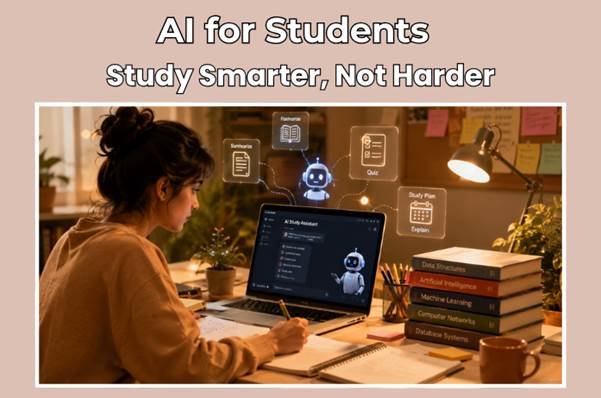
2. Students can use AI for studying, research, writing, note-taking, and exam preparation.
3 Teachers can save time by using AI for lesson planning, quizzes, grading, and classroom management.
4. AI supports learning but should not replace critical thinking or teacher guidance.
5. Using AI responsibly helps improve productivity while maintaining academic integrity.
What Are AI Tools Used in Education?
AI tools used in education are software applications powered by Artificial Intelligence that help improve teaching, learning, and academic productivity.
These tools can:
- Answer student questions
- Generate study notes
- Create lesson plans
- Summarize lengthy topics
- Check grammar and writing
- Design presentations
- Translate languages
- Generate quizzes
- Provide personalized learning recommendations
Instead of spending hours on repetitive tasks, students and teachers can focus on creativity, critical thinking, and meaningful learning.
Why AI Is Becoming Important in Education
The education system has changed dramatically over the past few years.
Students now learn from:
- Online courses
- Digital classrooms
- Educational videos
- Interactive quizzes
- AI-powered learning platforms
Teachers also manage larger classrooms while handling administrative work, grading, and curriculum planning.
AI in education helps reduce this workload while improving learning outcomes.
Some major benefits include:
- Saves valuable time
- Improves learning efficiency
- Provides instant feedback
- Supports personalized education
- Makes learning more interactive
- Encourages creativity
- Helps struggling learners
Most importantly, AI allows teachers to spend more time mentoring students rather than completing repetitive administrative tasks.
15 Best AI Tools Used in Education
1. ChatGPT
One of the most popular educational AI tools, ChatGPT helps students understand difficult concepts, solve problems, brainstorm ideas, and practice writing.
Students can use it for:
- Homework assistance
- Essay ideas
- Coding help
- Language learning
- Exam preparation
- Research summaries
Teachers can use ChatGPT to create lesson plans, quizzes, classroom activities, and discussion questions.
2. Grammarly
Writing is an essential skill in education.
Grammarly helps students improve:
- Grammar
- Spelling
- Vocabulary
- Sentence structure
- Writing clarity
Teachers also use Grammarly to prepare professional emails, reports, and teaching materials.
3. Canva Magic Studio
Design plays an important role in presentations and classroom learning.
Canva’s AI features help create:
- Presentations
- Posters
- Worksheets
- Infographics
- Classroom visuals
Students with little design experience can create professional-looking projects within minutes.
4. Microsoft Copilot
Microsoft Copilot works inside Word, Excel, and PowerPoint.
It helps students:
- Summarize documents
- Draft reports
- Analyze data
- Create presentations
- Organize information
Teachers can save hours while preparing classroom materials.
5. Google Gemini
Gemini assists with research, brainstorming, explanations, and content generation.
Students use it to:
- Understand difficult topics
- Generate study plans
- Practice interview questions
- Explore complex concepts
It acts like a smart learning assistant available anytime.
6. Notion AI
Organizing study material becomes much easier with Notion AI.
Students can:
- Manage notes
- Create revision plans
- Summarize lectures
- Organize assignments
- Build study schedules
It is especially useful during exam season.
7. Quizlet AI
Quizlet transforms textbooks into interactive learning experiences.
Students can create:
- Flashcards
- Practice quizzes
- Memory games
- Revision tests
Its AI recommends personalized practice based on learning progress.
8. Khanmigo
Built to support education, Khanmigo provides guided learning instead of simply giving answers.
Students receive:
- Step-by-step explanations
- Personalized tutoring
- Critical thinking guidance
- Interactive learning support
It encourages genuine understanding.
9. Duolingo Max
Language learning becomes more engaging with AI.
Students receive:
- Conversation practice
- Grammar explanations
- Speaking feedback
- Personalized lessons
AI makes learning a new language feel natural and enjoyable.
10. Perplexity AI
Research often takes hours.
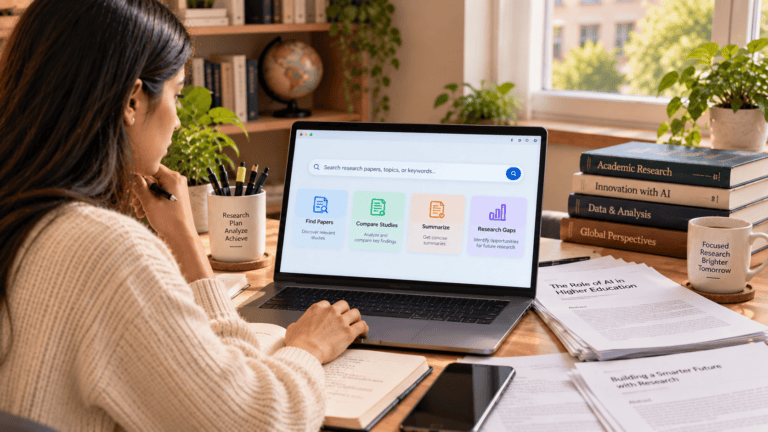
Perplexity AI helps students quickly gather information with cited sources, making it easier to understand topics and verify facts.
It’s especially useful for research projects and assignments.
11. Gamma AI
Creating presentations can consume valuable time.
Gamma AI generates:
- Beautiful presentations
- Study reports
- Educational documents
- Visual summaries
Students can focus more on content rather than formatting.
12. Otter.ai
Students sometimes struggle to keep up with fast-paced lectures.
Otter.ai records and transcribes lectures into searchable notes, ensuring that important information isn’t missed.
Teachers can also use meeting transcripts for future reference.
13. Curipod
Curipod creates interactive classroom lessons using AI.
Teachers can quickly generate:
- Icebreaker activities
- Polls
- Discussions
- Interactive presentations
This increases classroom engagement.
14. MagicSchool AI
Designed specifically for teachers, MagicSchool AI helps create:
- Lesson plans
- Rubrics
- Classroom activities
- Parent communication
- Student feedback
It significantly reduces lesson preparation time.
15. Socratic
Socratic helps students understand homework through AI-powered explanations.
Instead of simply displaying answers, it explains the concepts behind the solutions, making learning more meaningful.
Comparison Table: Best AI Tools Used in Education
| AI Tool | Best For | Ideal Users | Free Version |
| ChatGPT | Homework help, explanations, brainstorming | Students & Teachers | Yes |
| Grammarly | Grammar and writing improvement | Students & Teachers | Yes |
| Canva Magic Studio | Presentations and educational designs | Students & Teachers | Yes |
| Microsoft Copilot | Document writing and productivity | Students & Teachers | Limited |
| Google Gemini | Research and concept explanations | Students | Yes |
| Notion AI | Note-taking and study organization | Students | Limited |
| Quizlet AI | Flashcards and exam preparation | Students | Limited |
| Khanmigo | Personalized AI tutoring | Students | Limited |
| Duolingo Max | Language learning | Students | No |
| Perplexity AI | Research with cited sources | Students & Researchers | Yes |
| Gamma AI | AI-powered presentations | Students & Teachers | Yes |
| Otter.ai | Lecture transcription and notes | Students & Teachers | Yes |
| Curipod | Interactive classroom lessons | Teachers | Limited |
| MagicSchool AI | Lesson plans and teaching resources | Teachers | Limited |
| Socratic | Homework explanations | Students | Yes |
Benefits of AI Tools Used in Education
1. Personalized Learning
Every student learns differently.
AI analyzes learning patterns and recommends lessons based on individual strengths and weaknesses.
2. Faster Learning
Students spend less time searching for information and more time understanding concepts.
3. Better Student Engagement
Interactive quizzes, AI tutors, and visual learning make education more enjoyable.
4. Reduced Teacher Workload
Teachers can automate repetitive tasks such as grading, lesson planning, and worksheet creation.
5. Improved Accessibility
Students with disabilities benefit from:
- Speech-to-text
- Text-to-speech
- Translation
- Reading assistance
AI helps create more inclusive classrooms.
Challenges of Using AI in Education
While AI offers many advantages, it also comes with certain challenges.
Some concerns include:
- Overdependence on AI
- Incorrect or outdated information
- Privacy concerns
- Reduced critical thinking if misused
- Need for digital literacy
Students should use AI as a learning companion, not as a shortcut for completing assignments without understanding the material.

Best Practices for Using AI Responsibly
To get the most value from AI tools used in education, follow these simple practices:
- Use AI to understand concepts rather than copy answers.
- Always verify important information from reliable sources.
- Add your own ideas and creativity to assignments.
- Respect your school’s academic integrity policies.
- Balance AI-assisted learning with independent thinking and practice.
When used responsibly, AI can strengthen learning instead of replacing it.
The Future of AI in Education
The future of education looks increasingly personalized, interactive, and accessible.
Soon, AI may provide:
- Real-time personalized tutors
- Virtual classrooms with immersive experiences
- Instant learning analytics
- Adaptive textbooks
- AI-powered career guidance
- Advanced language translation for global classrooms
Yet, there is one thing that definitely will not be changing, and that is the value of having teachers. Machines can give us knowledge, but teachers instill the feeling of wonder, encourage self-assurance, and create connections with their students.
Final Thoughts
The rise of AI tools used in education marks one of the most exciting changes in modern learning. These tools are helping students study more efficiently, supporting teachers with everyday tasks, and making education more engaging for learners of all ages.
Yet, the true power of AI lies not in doing the work for us but in helping us learn better. A student who uses AI to explore ideas, ask thoughtful questions, and deepen understanding will gain far more than someone who simply searches for quick answers.
Education has always been about curiosity, growth, and lifelong learning. AI simply gives us better tools to continue that journey. When human creativity and intelligent technology work together, the possibilities for education become limitless.
FAQs
1. What AI tools are used in education?
AI tools are applications that help students and teachers with learning, teaching, writing, research, and classroom tasks.
2. Which AI tool is best for students?
Popular choices include ChatGPT, Grammarly, Quizlet, Notion AI, and Perplexity AI.
3. Can AI replace teachers?
No. AI supports teachers, but it cannot replace human guidance, creativity, and personal interaction.
4. Are AI education tools free?
Many AI tools offer free plans, while premium features require a paid subscription.
5. Is using AI for studying cheating?
No, if it’s used for learning and understanding. However, submitting AI-generated work as your own may violate academic rules.
For additional updates and insights on educational technology, visit EdTech Vibe


One Comment