Essential Features Every Modern eLearning Platform Should Have in 2027
If you look a few years back, you will see that an online course was meant to be a video, a PDF, and a quiz at the end. As a learner, your job was to log in, click the particular course, and start learning. In that learning process, you might skip a lesson or forget to go through an important module. But there was no warning or reminder from the platform.
But in this current scenario, the integration of the new features has changed the whole e-Learning experience. Now platforms can tell when you’re struggling with a concept before you do and also can adjust the next lesson for you based on how you answered the last one.
So, you might think: which essential eLearning platform features will shape digital learning in 2027 and personalize your learning experience? Let’s learn about it in this blog.
Why Modern eLearning Platform Requirements Are Shifting in 2027
If you want to understand what makes an e-Learning platform great today, you first have to look at why old systems are falling. Traditional LMS mainly focused on administrative control. The key concerns were: Did the students click the course? Did they spend enough time on the pages? Did they pass the test?
But in 2027, the focus is changing and the three things are driving this shift for the better. Here are the changes we are talking about.
- AI is here and it is playing a key role in personalizing learning at scale. So, you don’t just get a recommendation but also a personalized learning experience.
- Learners are now a bit advanced. They don’t like a platform with generic LMS features. So, they won’t take much time to switch to another platform that matches their learning needs.
- Administrative bodies like schools and employers now care less about “did you finish the course” but more about “can you actually apply your learning”.
That shift shows that the eLearning platform features that mattered in 2020 (video hosting, basic quizzes, a certificate at the end) are now just the baseline. A genuinely useful platform is the one that smoothly gets adapted by the learner using it.
Essential eLearning Platform Features That Will Matter in 2027
If you are a learner signing up for an e-Learning platform or a teacher recommending one to your class, you should evaluate the platform on the basis of its modern features. Here is what you need to look for in a modern e-Learning platform.
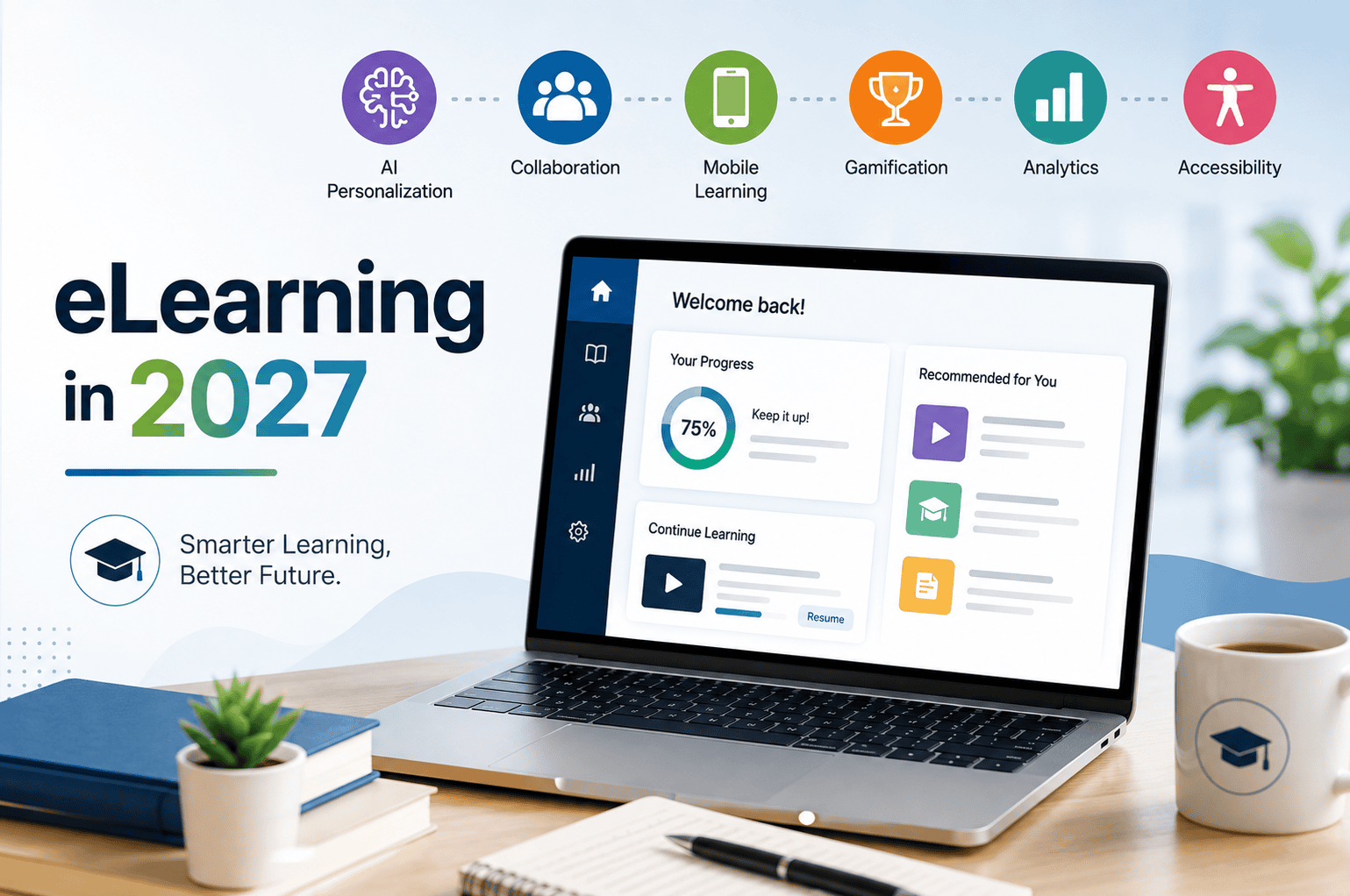
AI-driven personalization
The biggest shift in eLearning platform features is happening with AI. With the help of AI integration, a good LMS tracks how you’re doing and makes the necessary changes in real time. If you are done with the basics, the LMS would recommend an intermediate or advanced course. Similarly, if you are struggling with a concept, the platform would offer a different explanation or recommend extra practice. Duolingo has been doing a version of this for years with language learning. By 2027, expect this kind of personalization across nearly every subject, not just niche apps.
Interactive and collaborative learning
Some learners may feel learning alone can be a bit challenging. So, they look for collaborative learning. A good LMS encourages that with learning management system features like live discussions, group projects, peer review, and study groups. Such platforms that build in a sense of community tend to see far better completion rates than the ones that leave you scrolling solo through a video library.
Mobile-first learning with cross-device sync
Everyone has a different learning setup. Some may not learn at a desk with reliable Wi-Fi. A modern eLearning platform lets you download a lesson on your laptop and pick it up on your phone during a commute. Such platforms even help you to get back to that lesson again later without losing your place. Though it sounds like a basic feature, many platforms still get it wrong. But this feature differentiates a well-built platform from a generic one.
Gamification mechanics
You must not forget about your learning achievements. Features like streaks, badges, XP points, and leaderboards may seem like small additions, but they can make a big difference. Good gamification shows learners how far they have progressed and also motivates them to keep going. Thus, learning becomes exciting and enjoyable.
Robust data analytics dashboards
This feature is not just for teachers and admins. It also helps learners to understand their own progress. When you look into the dashboard, you get a clear idea about what you’ve completed, where you’re doing well, and which areas need more practice. This tracking helps you to understand where to focus on next. That is why analytics has become one of the most valuable LMS features in modern learning platforms.
Accessible and inclusive learning design
Accessibility should be the basic feature of every e-Learning platform. A good platform should be easy for everyone to use, including people with visual, hearing, or learning disabilities. To make the learning inclusive and smooth, platforms can integrate features like screen reader support, closed captions, adjustable text size, and keyboard navigation. A platform designed with accessibility in mind creates a better learning experience for everyone.
No single platform needs to have all of these perfectly. But the right features can keep learners engaged and motivated to continue.
How to Choose the Right Platform for You
Good features can make an e-Learning platform highly functional and engaging. But how to choose the right one when you have a lot of options available in the market? If you are feeling confused, consider the following factors before choosing a platform.
- Match it to your goal: Your learning goal differs. So choose a platform according to that. A platform can be great for casual hobby learning. However, it may be lacking when you need a verified credential for a job application.
- Try before you commit: Don’t invest your hard-earned money into something before trying it. Most platforms offer a free trial or sample lesson. Use it to see if the AI personalization actually feels helpful.
- Check for real support: Choose a platform that offers quick and helpful customer support when you need assistance. If you can easily reach a real person for help, that’s an added advantage.
- Ask other learners: Reviews from other learners help you make an informed decision. These reviews and forums often reveal what marketing pages won’t tell you. So keep reviews and ratings in your consideration.
- Focus on what you really need: Don’t get overwhelmed and choose a platform just because it has lots of features. Sometimes, all you need is a simple platform with the tools you’ll use every day.
Keep all these into consideration, and you can definitely choose a platform that would help make your learning both effective and enjoyable.
Conclusion
Digital learning will continue to evolve but one thing will remain constant: people learn best when the experience is engaging, flexible, and designed around their needs. To keep up with the learners’ expectations, organizations and educators must focus on integrating the essential eLearning platform features. These features will genuinely improve learning rather than simply adding more technology.
A successful platform in 2027 will be the one that personalizes learning, encourages participation, and improves accessibility. These ultimately help both the learners and the educators achieve better outcomes.
Discover more insights, tools, and practical resources for modern digital learning at EdTech Vibe.
References